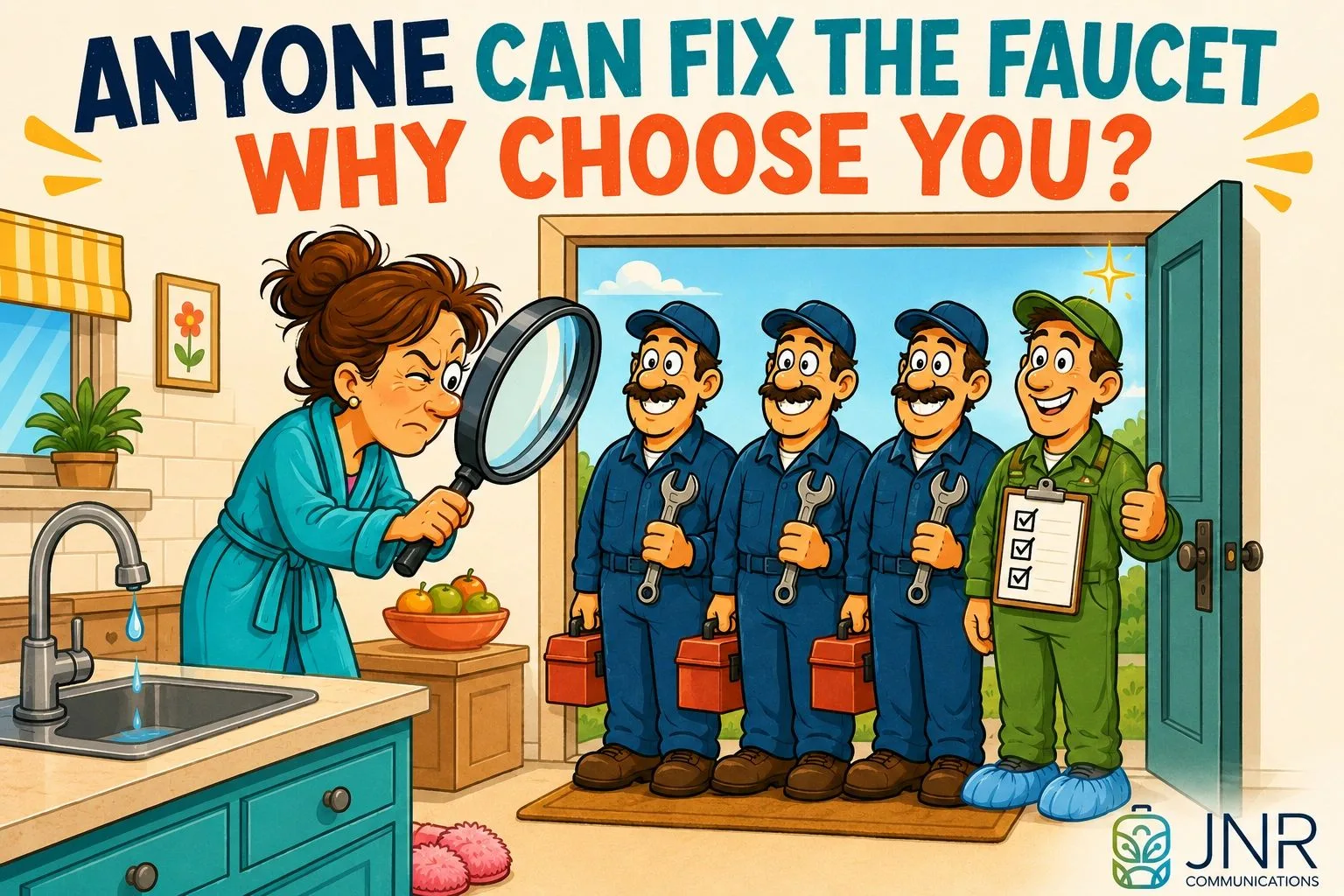
A friend of mine needed a water heater replaced last year. She did what everybody does. She got three bids.
Then she sent me the three company websites, because she could not tell them apart and wanted a second opinion.
I read all three. Every one of them said family owned. Every one said quality workmanship. Every one said over twenty years of experience, licensed and insured, free estimates, satisfaction guaranteed. Two of them used the same stock photo of a smiling technician.
She picked the cheapest one. Of course she did. When three options look identical, price is the only variable left, so price is what people use.
That is the trap most service businesses are living in, and here is the uncomfortable part: it is self-inflicted. Nobody forced those three companies to describe themselves in interchangeable language. They chose it, one safe phrase at a time.
If your customer can only compare price, that is a marketing problem, not a market problem.
Differentiation Is Not a Slogan. It Is a Promise You Can Be Held To.
I have sat through a lot of positioning conversations across a lot of industries, and the same thing happens every time. Ask a business owner what makes them different and you get adjectives. Reliable. Honest. Professional. Detail oriented.
Those are not differentiators. They are table stakes, and worse, they are unverifiable. Nobody can check "honest" before hiring you. Your competitor claims it too, on a website that looks a lot like yours.
Run everything you say about yourself through two questions.
Could a customer hold me to this? If there is no way to fail at it, it is decoration, not a promise.
Could my three closest competitors honestly say the exact same sentence? If yes, you have not differentiated. You have described the industry.
"We care about our customers" fails both tests. "We call you back within two business hours or the diagnostic is free" passes both, and it is not even a better business. It is the same business, described in a way somebody can actually evaluate.
Turn "We Do Good Work" Into Three Provable Commitments
You do not need ten. Three is plenty, and three is memorable. Pull one from each of these categories.
1. A commitment about how you communicate. This is where most service businesses lose customers, and it has nothing to do with skill. People do not hate paying for repairs. They hate not knowing when you are coming.
Examples of real, checkable promises: a two-hour arrival window instead of a day. A text with the technician's name and photo when they are on the way. A same-day callback on every message received before 3pm. A phone answered by a person during business hours.
2. A commitment about the work itself. Name your process. If you have a sequence you follow every time, and you almost certainly do, write it down and give it a name. A twelve-point inspection. A three-stage cleanup. Shoe covers and drop cloths on every job, no exceptions.
The naming matters more than it sounds. An unnamed process is invisible. A named one is something the customer notices, remembers, and repeats to a neighbor.
3. A commitment about what happens after. This is the fear category, and it is where the strongest promises live. Price locked before work starts, with no change without your approval in writing. A follow-up call thirty days later. A written warranty in plain language on the invoice, not buried on page four of a PDF.
The test for all three: would you put it in writing, on the estimate, knowing a customer might hold you to it in front of everyone? If the answer makes you slightly nervous, you have found a real differentiator. That flicker of nervousness is exactly why your competitors will not copy it.
Then Publish It Everywhere a Buyer Looks
A standard nobody knows about is just a nice internal habit. Once you have your three, put them in front of people at every point of contact.
On your homepage, above the fold, where the stock photo used to be. On the estimate, as a short list the customer reads while deciding. On the truck, if it fits in a few words. In the script your phone answerer uses, because that is the first live moment anyone experiences your business. On the invoice at the end. And in your review request, because a customer who was told the standard up front will mention it by name in the review, and now strangers are reading your differentiator in someone else's words.
That last one compounds quietly. Reviews that describe a specific standard sell far harder than reviews that say "great job."
Make It Provable
Claims are weak. Evidence is strong.
Photograph the completed checklist and text it to the customer with the job photos. Show the clean workspace after, not just the repair. Publish the warranty terms in plain language on a page anyone can read without calling you. If you promise a two-hour window, track your on-time percentage and be willing to say the number out loud.
The businesses that dominate their local market are almost never the ones making the biggest claims. They are the ones making smaller claims they can prove on demand.
The Referral Bonus Nobody Mentions
Here is my favorite side effect, and it comes straight from years in referral networking.
People cannot refer a business they cannot describe. "They do good work" is not a referral, it is a shrug. But "they text you the technician's photo before they show up, and they lock the price before they start" is a story your customer can actually repeat at a barbecue.
A named standard hands your referral partners and happy customers the words. That is how a business becomes the one people mention by reflex, which is the real definition of being the go-to company in your area.
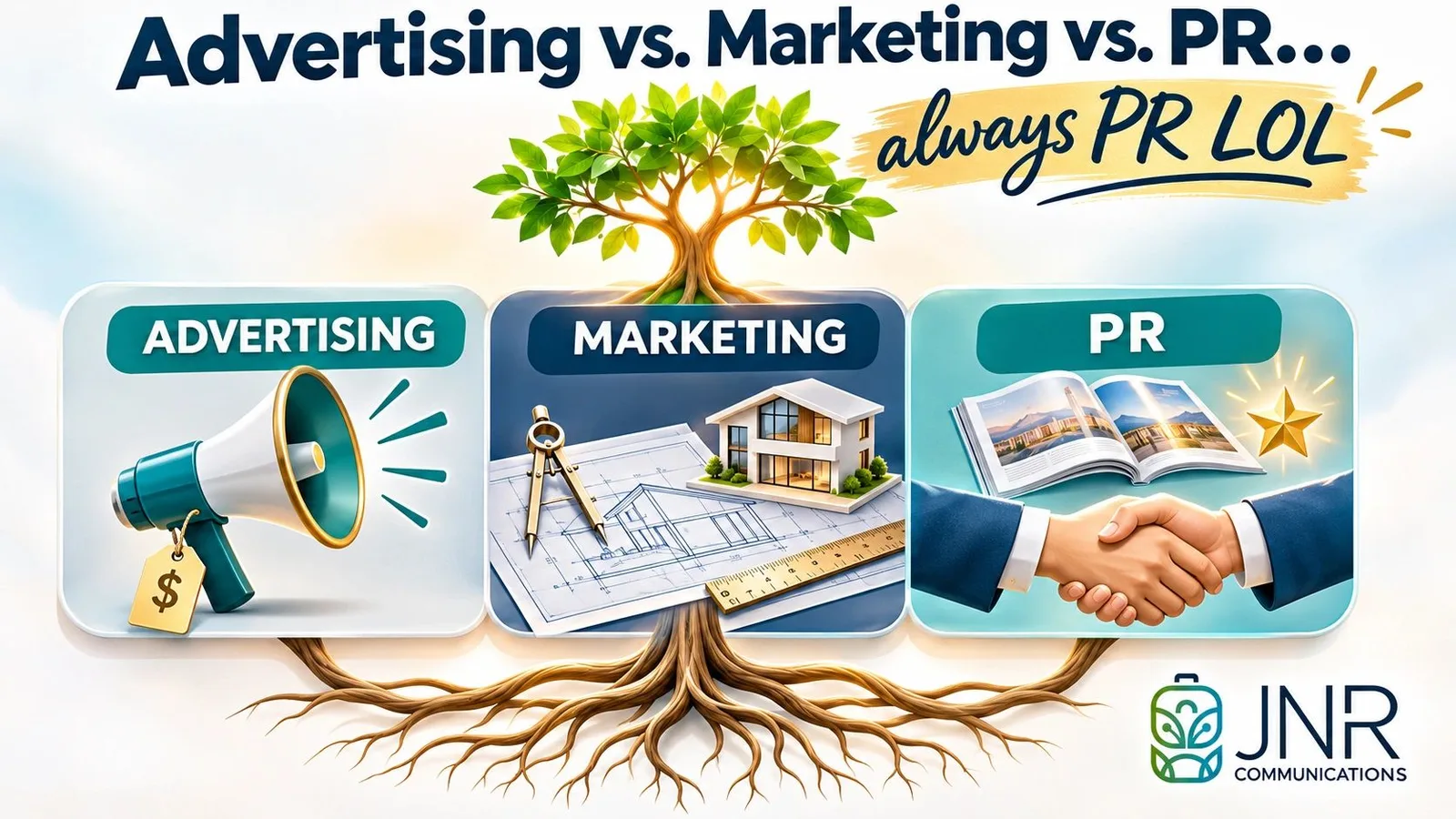
Where PR Multiplies It
Once you have a standard worth defending, you have something a local reporter can actually write about, which "we are a family owned company" never was. A published guarantee in an industry known for surprise charges is a story. A named process is a story. A business willing to state its on-time percentage is a story.
This is where earned media stops being abstract. Third-party coverage of your standard does something your own website cannot: it says a credible outsider looked at your promise and found it worth reporting. That is the difference between claiming you are the best and having someone else suggest it.
Do This Next Week
Open your website and read your own copy as a stranger seeing three tabs at once. Highlight every sentence your competitors could honestly say word for word. Whatever survives is your actual differentiation, and for most service businesses, almost nothing survives.
Then write your three commitments. Communication, work, aftermath. Make them specific enough to fail at, and put them on the estimate first, because that is the document people read while deciding.
Anyone can fix the faucet. The company that wins the neighborhood is the one that told you exactly what to expect, then did precisely that, every single time.
Your network determines your results in PR. JNR Communications brings deep media relationships and strategic networking expertise to help specialized businesses achieve the visibility they deserve. Let's build your relationship infrastructure together.
✉️ Greg@JNRcommunications.com