The Secret Behind Those Magazine Features
If you have ever read a trend story in Vogue, a product roundup in Allure, or a 'patients say' piece in a medical trade publication and wondered how certain brands keep appearing, I want to let you in on a pattern I have noticed across my years in PR and communications.
Those brands are almost never the loudest in the room. They are usually the ones with the best data.
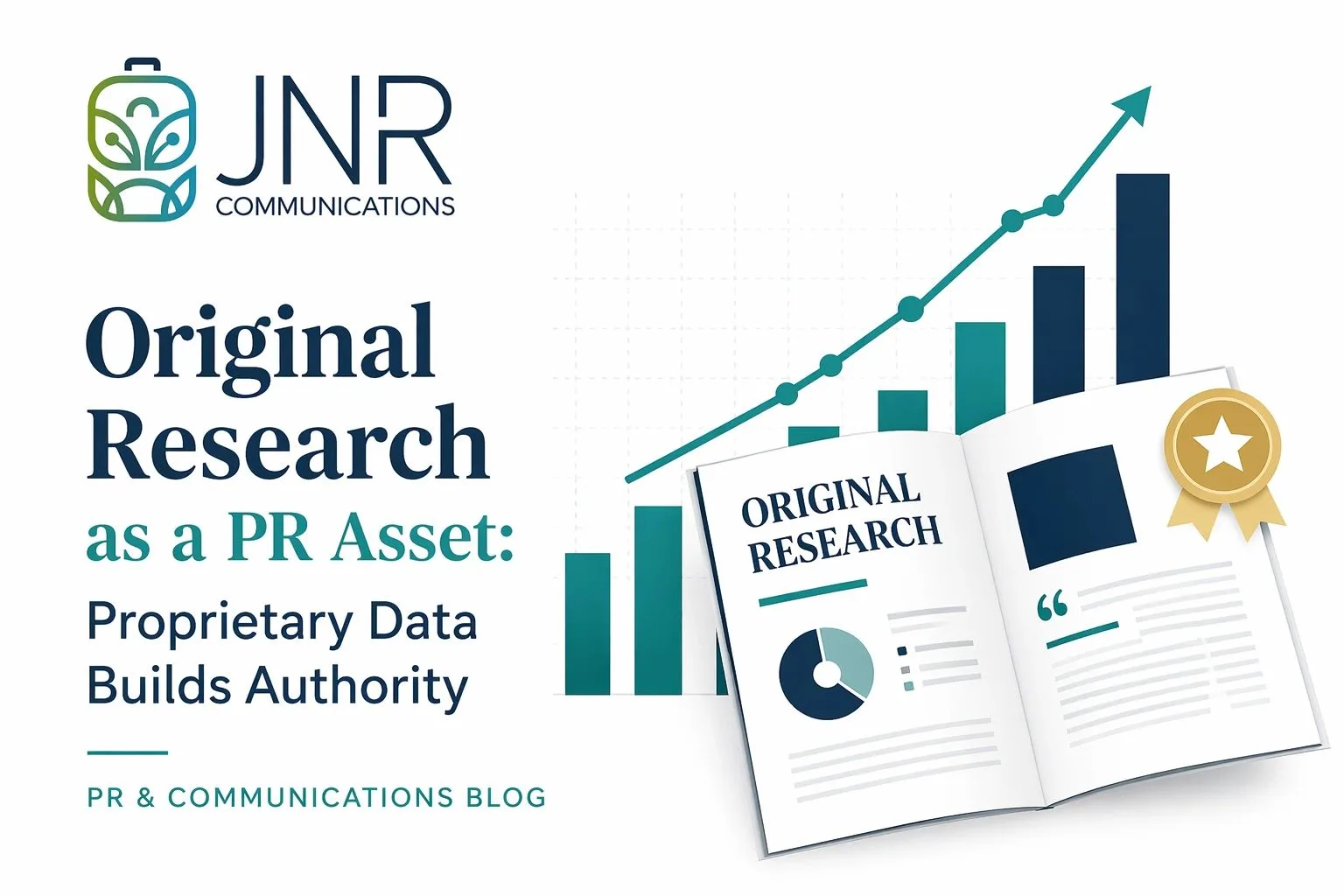
Original research, meaning surveys, outcome studies, consumer polls, and proprietary data that only your brand owns, is one of the most overlooked and underused PR assets in the beauty, wellness, and medical aesthetics industries. And once you understand how to use it, your approach to media outreach will never be the same.
Why Journalists Are Hungry for Data
Think about what a journalist or editor actually needs to write a compelling story. They need a hook, of course. But more than that, they need credibility anchors. They need numbers, statistics, and data points that make their story verifiable, shareable, and defensible to their editors.
A pitch that says 'our clients love their results' gives a writer nothing to work with. A pitch that says 'our patient survey of 400 clients found that 87% reported improved self-confidence within 60 days' gives a writer a headline.
That distinction is the difference between a pitch that gets ignored and one that earns a callback.
In my work at JNR Communications, alongside my partner Jennifer Rice, whose nearly 30 years of media relationships span publications like Good Housekeeping and New Beauty Magazine, we see this firsthand. Journalists at top-tier outlets gravitate toward pitches that offer them something exclusive. A unique data point qualifies. An opinion, no matter how expert, usually does not.
What Counts as 'Original Research'?
Here is where I see businesses overcomplicate things. You do not need a clinical trial or an academic study to produce media-worthy research. Original research in the PR context simply means data that no one else has, because you generated it yourself.
That can look like several things:
• A patient or client satisfaction survey with 100 or more respondents
• A trend report based on your booking or treatment data over 12 months
• A consumer sentiment poll about a procedure, product, or beauty trend
• An analysis of before-and-after outcome patterns across your practice
• A study comparing client results to industry benchmarks or published norms
The key is that the data is yours. It reflects your clients, your outcomes, and your perspective on the market. That exclusivity is what makes journalists pay attention.
The Credibility Multiplier
One thing my background in healthcare technology taught me is that trust is not given, it is earned through demonstrated expertise. When I was designing enterprise learning programs for clinical teams, the materials that got buy-in were not the ones full of persuasive language. They were the ones backed by outcome data.
Original research works the same way in PR. When you publish a survey or release findings from your own data, you are not just getting a media mention. You are building a credibility asset that compounds over time.
Here is what I mean. A single well-designed survey can generate:
• A press release that earns original coverage
• A data-forward pitch angle for follow-up stories
• Social media content built around key statistics
• A downloadable report that becomes a lead generation tool
• Speaking opportunities at industry conferences where you present findings
• Backlinks from media outlets that cite your data, improving your SEO authority
This is what I think of as the multiplier effect. One investment in research creation pays dividends across multiple channels and over an extended timeline. That is a smart allocation of resources for any brand.
A Practical Framework for Turning Customer Data into a PR Asset
Let me walk you through how we approach this with JNR clients, because the process does not have to be complicated.
Step 1: Identify what you already know
Start by auditing your existing data. Do you collect client intake surveys? Do you track treatment outcomes? Do you send post-visit satisfaction surveys? Many practices and brands are already generating rich data and simply have not thought about it through a PR lens. Before you design a new survey, look at what you already have.
Step 2: Design a focused research question
The best original research answers a question that your target audience, including journalists, clients, and referral partners, actually cares about. In medical aesthetics, that might be: 'What are the top concerns patients have before their first injectable treatment?' or 'How has interest in non-surgical procedures changed over the past two years?' A focused question produces findings that feel relevant and timely rather than generic.
Step 3: Gather a meaningful sample
You do not need thousands of respondents. For most PR purposes, a well-designed survey of 150 to 500 people within your target demographic is enough to generate credible, citable data. Use tools like Google Forms, Typeform, or SurveyMonkey to collect responses from your existing client list, email subscribers, or social media audience.
Step 4: Find the most compelling insight
Once you have your data, look for the finding that surprises you, challenges a common assumption, or confirms something your audience intuitively suspects but has never seen proven. That is your lead. Journalists are not looking for expected results. They are looking for findings that add something new to the conversation.
Step 5: Package it for media
This is where JNR comes in. A raw data set is not a PR asset. A well-packaged report, press release, and pitch narrative that leads with your most compelling finding and positions your brand as the source of important industry insight, that is a PR asset. The packaging matters as much as the data itself.
Common Mistakes to Avoid
I have seen brands put in the effort to generate original research and then undercut it with avoidable mistakes. Here are a few to watch out for:
• Publishing findings without a clear narrative. Data without a story is just numbers. Lead with the insight, not the methodology.
• Using too small a sample. Fewer than 50 respondents will raise credibility questions from journalists. Aim for at least 100 to 150.
• Sitting on findings. Research has a shelf life. Time-sensitive data should be pitched quickly, ideally within 30 to 60 days of collection.
• Forgetting the media hook. Ask yourself: why does a journalist's audience care about this finding today? If you cannot answer that, your pitch needs work.
Why This Matters More in Medical Aesthetics
The medical aesthetics industry faces a unique communications challenge. Consumers are making decisions that are personal, physical, and expensive. They need to trust the providers and brands they choose, and that trust is increasingly built online and through editorial coverage rather than advertising alone.
At the same time, journalists covering beauty and wellness are under pressure to produce credible, evidence-based content. They want more than 'this treatment is trending.' They want patient data, outcome evidence, and practitioner insight that gives their readers something real.
Original research bridges exactly that gap. It gives your brand a reason to be in the story and gives the journalist a reason to call you.
The brands that figure this out early will have a significant advantage. Media mentions compound. Authority builds. And in a competitive industry like medical aesthetics, being the source that journalists turn to for data is an incredibly durable competitive position.
Let's Build Your Research Strategy
You may already be sitting on the data that could earn your brand a feature in Allure, a mention in a trade publication, or a segment on a health and wellness podcast. You just have not packaged it yet.
At JNR Communications, we help beauty, wellness, and medical aesthetics brands identify, develop, and position original research for maximum media impact. Jennifer's relationships with editors at the publications your clients actually read mean your findings land on the right desks. And our strategic approach to packaging ensures your data tells the story it deserves to tell.
If you are ready to find out whether your business is sitting on a PR-worthy research asset, let's have that conversation.
Ready to turn your data into media authority? At JNR Communications, Jennifer Rice's nearly 30 years of editorial relationships and our deep expertise in medical aesthetics PR mean your original research reaches the right editors at the right publications. Let's build your research strategy together.
📧 Greg@JNRcommunications.com / 🌐 JNRcommunications.com