
Let me tell you something I hear almost every week.
A founder of a growing medspa reaches out to us. Or a medical device startup. Or a solo aesthetics practitioner who has built something genuinely impressive and wants the world to know about it. And somewhere early in the conversation, they say some version of the same thing:
"We would love to do PR, but we figured that was only for the big brands."
I understand where that thinking comes from. PR, in its old-school form, could feel like an exclusive club. Big retainers, big agency overhead, big promises that sometimes delivered and sometimes did not. If you were not spending six figures a year, you might assume you were not playing in that game.
But here is what I have learned over decades of working in business development, healthcare technology, professional networking, and now PR: visibility is not a function of budget. It is a function of strategy, relationships, and consistency. And those three things are available to every business, regardless of size.
In this post, I want to break down what PR actually looks like for growing practices and companies working with leaner budgets, and how to get genuine, durable visibility without spending like a Fortune 500 company.
Start With What You Already Have
One of the biggest misconceptions about PR is that it requires a big news event or a groundbreaking product launch to generate coverage. It does not. What it requires is a compelling story, and almost every practice and growing company already has one.
Think about why you started. Think about the patients or clients you have helped, the technology you have adopted, the problem you are uniquely positioned to solve. That is your story. And that story, told well, is the foundation of every PR effort you will ever make.
When I was working in healthcare technology education, one thing became clear to me very quickly: the organizations that communicated most effectively were not the ones with the biggest marketing budgets. They were the ones that understood their own value and could articulate it in human terms.
So before you spend a single dollar on PR, get clear on these three things:
• What do you do that genuinely makes a difference in people's lives?
• Who is the specific audience that needs to hear that message?
• What makes your approach different from the alternatives?
If you can answer those questions clearly, you have the raw material for a real PR strategy.
Earned Media: The Asset That Keeps Paying
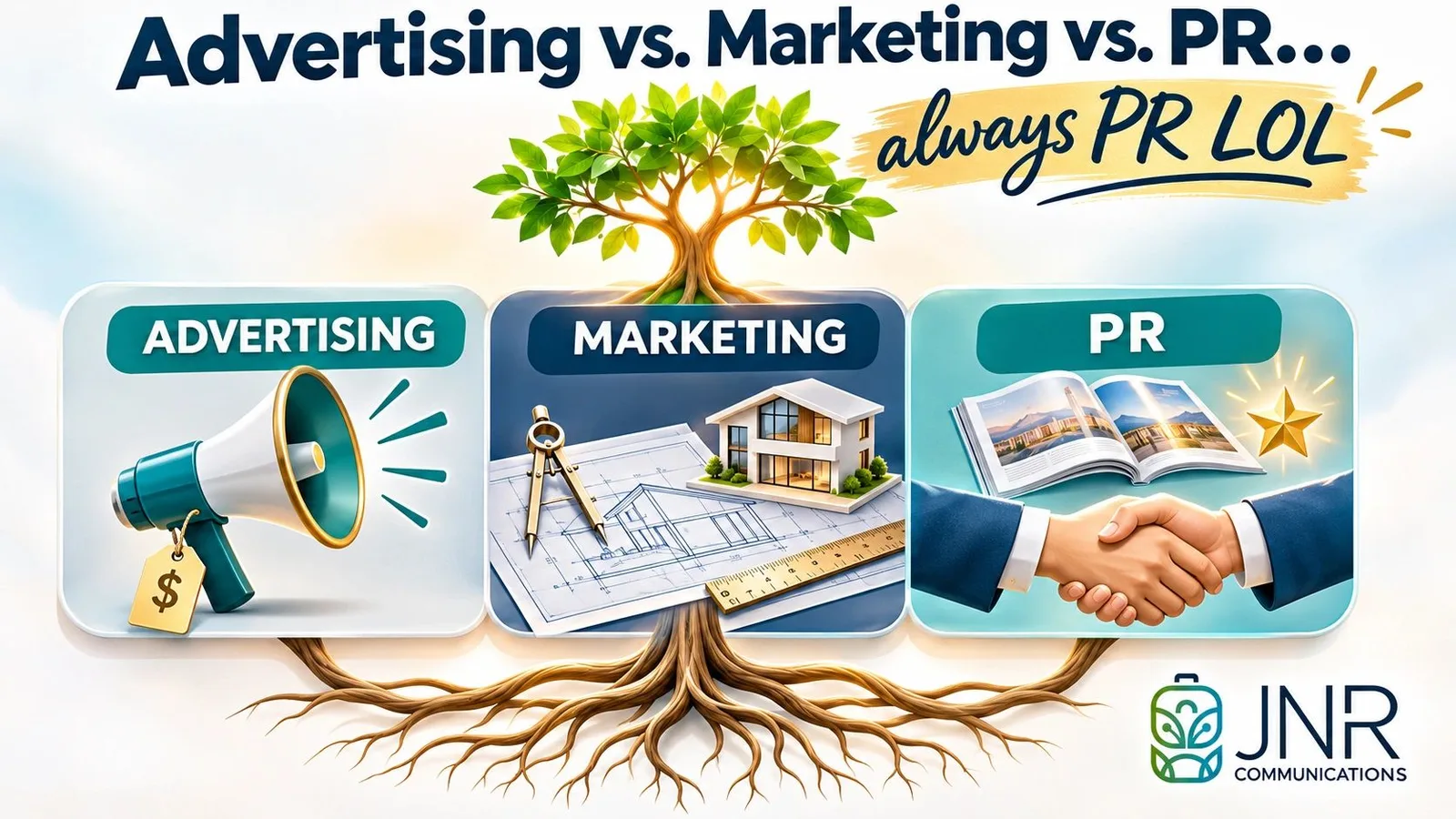
There are two kinds of media coverage. Paid media is advertising. You pay for placement, you get placement, and when the budget runs out, so does the visibility.
Earned media is different. It is coverage you generate because a journalist or editor decided your story is worth telling. A feature in a trade publication. A quote from your medical director in a beauty magazine. An expert commentary piece that positions your practice as the go-to authority in your specialty.
Earned media costs you time and strategy, not necessarily large amounts of money. And unlike an ad that disappears when the campaign ends, a great article or feature lives on. It gets shared. It shows up in search results. It gets referenced in future pitches. It builds credibility over time in a way that paid placement simply cannot replicate.
At JNR Communications, Jennifer Rice has spent nearly 30 years building the kind of media relationships that make earned coverage possible. When we pitch a story, it is not a cold email into a void. It is a conversation between people who trust each other. That relationship infrastructure is what separates a pitch that lands from one that gets deleted without being read.
For growing practices and smaller companies, that is precisely the kind of leverage that levels the playing field.
Relationship-Based PR: The Small-Brand Advantage
Here is something bigger companies actually struggle with: authenticity at scale.
When you are a growing practice or a small-to-mid-size medical technology company, you have something large brands spend enormous energy trying to manufacture. You have a face. You have a founder story. You have practitioners who genuinely care about outcomes. You have relationships with real patients and clients who have experienced real results.
That authenticity is an asset. And it is one of the most powerful things you can bring to a PR strategy.
I learned this clearly during my time in Japan on a Ministry of Education scholarship. Japanese business culture is deeply rooted in what is called nemawashi, a process of building consensus and trust before making a move. Nothing happens until the relationship is established. I have carried that lesson through every industry I have worked in since.
PR built on genuine relationships produces better results than PR built on broadcast pressure. When your practitioners have developed real trust with journalists, when your brand has shown up consistently and helpfully in industry conversations, when editors know your name because you have given them useful information before you ever asked for anything, the coverage follows naturally.
We call this relationship infrastructure. And it does not cost more to build than transactional PR. It costs less, because it compounds over time rather than requiring constant reinvestment.
Practical PR Tactics That Work on Any Budget
So what does this look like in practice? Here are the approaches I recommend most often for growing practices and cost-conscious companies:
1. Develop a media-ready expert perspective. Journalists covering medical aesthetics, wellness, and health technology are always looking for credible voices to comment on trends. Position your medical director, founder, or lead practitioner as a go-to source. That starts with having a clear point of view and being available when editors need a quote.
2. Tell patient and client success stories. With proper permissions and privacy considerations, real outcomes are some of the most compelling media content available. A transformation story, told honestly and with clinical context, resonates far more than any feature list.
3. Align with industry moments.Trade shows, awareness months, and industry reports create natural news hooks. If your practice offers a treatment that aligns with a trending topic, that is an opportunity to pitch relevant media with a timely angle.
4. Use LinkedIn as a relationship channel, not just a broadcast channel. I have seen brands build remarkable visibility simply by showing up consistently on LinkedIn with useful, honest content. Comment on what journalists and editors post. Share your perspective on industry trends. Build familiarity before you ever need to ask for coverage.
5. Pursue award submissions strategically. Industry awards carry real weight with patients, referral partners, and media. We help clients identify the right awards for their specialty and craft submissions that tell their story compellingly. A win or even a finalist placement generates content and credibility that pays dividends for years.
What a Smart PR Investment Actually Costs
The question I get asked most often is some variation of: how much do I need to spend to make PR work?
The honest answer is that it depends more on strategy than on budget. A well-targeted pitch to three publications that genuinely cover your niche will outperform a mass blast to a hundred outlets almost every time. A single authentic feature in Good Housekeeping or New Beauty Magazine will do more for a wellness brand than a dozen lower-tier placements.
What a boutique PR agency like JNR can offer a growing practice or emerging medical technology company is focused attention, deep vertical expertise, and the kind of media relationships that take years to build. We are not trying to serve every industry simultaneously. We are specialists in medical aesthetics, beauty, wellness, and related fields. That specialization translates directly into better results for our clients.
You do not need to spend like a large brand. You need to invest strategically, in the right relationships, with the right story, at the right time.
The Long Game Is Always Worth Playing
I want to close with something that I think gets lost in conversations about budget and tactics.
PR done well is not a campaign. It is a long-term investment in how the world perceives your brand. The practices and companies that build the strongest reputations are not the ones that chased the biggest single splash. They are the ones that showed up consistently, contributed genuinely to their industry conversations, and built trust over time with both media and their communities.
We go into every relationship looking for how we can contribute before you ask for anything, the returns come back to you multiplied. I have watched that principle work in networking, in business development, in healthcare technology, and now in PR.
Give journalists useful information. Give your community genuine expertise. Give your patients and clients real results and honest communication. The visibility follows.
And if you want help figuring out exactly how to do that for your specific practice or company, that is what we are here for.
Ready to explore what strategic PR can do for your practice or company?
JNR Communications combines Jennifer Rice's nearly 30 years of media relationships with deep expertise in medical aesthetics, beauty, wellness, and medical technology. We help growing brands achieve the kind of visibility that builds lasting credibility, not just a moment of attention.
Let's talk about your goals.
Greg@JNRcommunications.com | JNRcommunications.com
About the Author
Greg Kaufman is a Partner at JNR Communications, a Las Vegas-based PR agency specializing in medical aesthetics, beauty, and wellness industries. With a background spanning healthcare technology education, international business development, and professional networking, Greg brings a relationship-focused perspective to PR and social media strategy. Connect with him on LinkedIn.