I have walked a lot of trade show floors. From healthcare technology expos to medical aesthetics conferences, I have watched the same scene play out thousands of times: a beautifully designed booth, polished staff, stacks of brochures, and a company wondering at the end of the show why the leads felt flat.
Here is what I have learned: the booth was never the problem. The strategy was.
The trade show landscape has shifted dramatically. The brands that are winning at events today are not just showing up; they are engineering the entire experience around a single goal: building relationships that outlast the show floor. And the playbook they are using looks very different from what worked even five years ago.
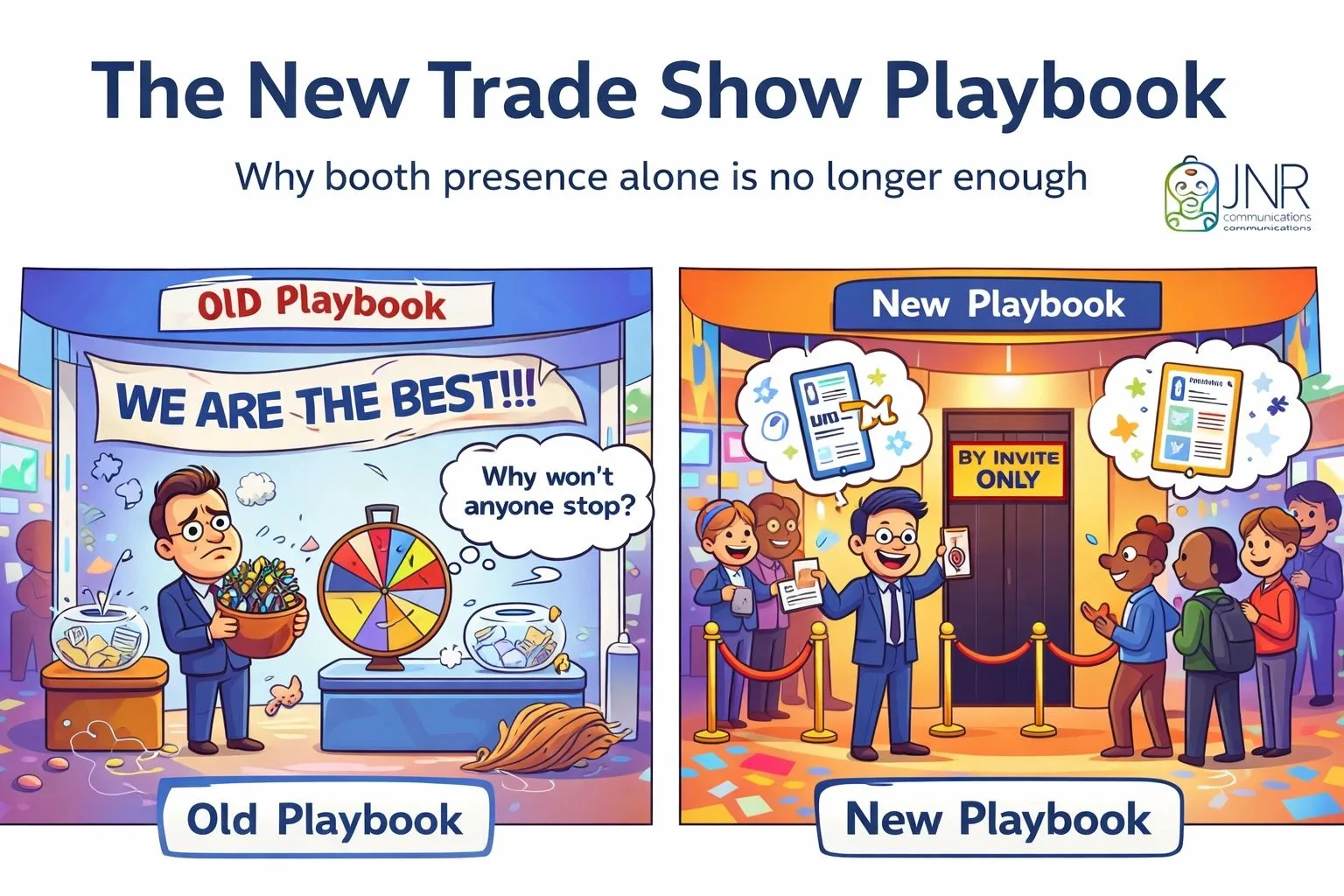
The Booth-as-Billboard Era Is Over
For decades, trade show success was measured in square footage. The bigger the booth, the louder the message. Companies invested enormous budgets in backlit walls, video screens, and giveaways designed to attract foot traffic. And for a while, it worked.
But attendee behavior has changed. Today's trade show participant is more selective, more distracted, and more skeptical of pure promotional environments. They scan QR codes, check LinkedIn before walking over to a booth, and make mental decisions about who is worth their time before they even step into the hall.
This means the battle for attention is not won on the show floor. It is won in the weeks before the event and in the intimate moments that happen away from the main hall.
Private Suites: Where Real Conversations Happen
One of the biggest shifts I have seen in the last several years is the rise of the private suite strategy. Rather than relying on a booth to attract walk-by traffic, smart brands are booking a suite at the host hotel and inviting curated guests for conversations that actually go somewhere.
Think about what a private suite offers that a booth simply cannot: quiet, focus, exclusivity, and the sense that the guest was specifically invited. That is a fundamentally different relationship dynamic.
In the medical aesthetics world specifically, where the audience includes physicians, practice owners, and key opinion leaders, the value of a private conversation over a glass of wine cannot be overstated. These are people with limited time and high expectations. Giving them an environment where they can ask direct questions and get direct answers is worth more than any banner stand or spinning wheel giveaway.
The key to making the private suite strategy work is curation. Not everyone needs to be in the room. The goal is to bring together the right people for conversations that benefit both sides. That requires knowing your target audience deeply and doing the relationship-building work before the invitations go out.
Experiential Activations: Creating Moments Worth Talking About
Another major evolution in the trade show playbook is the shift from passive display to active experience. Brands that are standing out at events are creating moments that attendees want to talk about, photograph, and share.
Experiential activations can take many forms. A live demonstration that lets attendees feel the technology firsthand. A branded lounge that offers a genuine respite from a crowded floor. An interactive education session that provides real clinical insight rather than a sales pitch disguised as a panel. A reception with a specific theme that gives attendees a reason to show up and a story to tell.
What makes an activation truly effective is not production value; it is relevance. The experience has to connect directly to what your audience cares about most. In the beauty and wellness space, that often means giving them something they can use in their practice or recommend to their clients. In the medical device world, it means giving clinicians hands-on time with technology in a context that mirrors their real workflow.
My background in training and education design taught me a foundational principle that applies directly here: people retain what they experience, not what they are told. If you want your brand to stick in someone's mind after they have walked a hundred booths, give them something to do, not just something to look at.
Pre-Show Content: The Most Underused Weapon in Trade Show PR
If there is a single area where most brands are leaving the most value on the table, it is the six to eight weeks before the event.
Pre-show content strategy is the difference between showing up and arriving. When you build a content cadence leading into a major trade show, you do several things simultaneously: you warm up your target audience before they arrive, you establish your perspective as a thought leader in the conversation already happening around the event, and you create reasons for people to seek you out once they are on-site.
This is where PR and content marketing work together in a genuinely powerful way. A well-placed article in a trade publication in the weeks before a show. A LinkedIn post series that builds anticipation for what you will be sharing. A podcast episode with a key opinion leader that goes live the week of the event. An email to existing clients with a personal invitation to your suite or activation.
The goal is not to announce that you will be at the show. The goal is to give your audience a reason to care that you are there. That is a subtle but critical distinction.
I think about this through the lens of nemawashi, the Japanese principle of laying the groundwork before a decision is made. In Japanese business culture, the conversation that happens before the meeting is often more important than the meeting itself. Pre-show content is your nemawashi. It is the work you do to make the on-site conversation easier, warmer, and more productive.
Post-Show Follow-Through: Where Most Brands Drop the Ball
Here is an uncomfortable truth: most trade show ROI is lost in the two weeks after the event ends.
Companies spend enormous energy preparing for a show and then return home exhausted, letting follow-up fall to a generic email blast and a pile of business cards that never quite get actioned. The relationships that were genuinely warm at the show cool off. The momentum evaporates.
The new playbook treats post-show follow-through as a structured campaign, not an afterthought. That means personalized follow-up for suite guests and activation participants. It means content published after the show that continues the conversation. It means the media coverage you secured at the event gets amplified through your own channels so your audience sees you the way the press sees you.
Givers Gain applies here as powerfully as anywhere else in business development. The follow-up that works is not the one that asks for something; it is the one that gives something. A summary of insights from the conference. A connection to someone the other person should know. A resource that is directly relevant to a conversation you had in person.
How JNR Communications Helps Brands Execute the New Playbook
This is the work we do every day at JNR Communications, and it sits at the intersection of strategic PR, relationship building, and content execution.
My partner Jennifer Rice has spent nearly 30 years building the kind of media relationships that make pre-show placement possible. When a client is preparing for a major industry event, Jennifer is already in conversation with editors at relevant publications and other key trade and consumer media outlets about story opportunities that align with the show calendar. That is not a pitch; that is a relationship delivering value.
On the strategy side, we help clients think through the full event arc: what the pre-show content calendar should look like, how to structure an on-site experience that creates genuine conversation, and how to build a post-show follow-up sequence that turns warm contacts into lasting relationships.
We specialize in the medical aesthetics, beauty, wellness industries and CPG products which means we understand both the regulatory environment and the relationship dynamics of these communities. The key opinion leaders, the conference organizers, the editors, the practice owners; these are not abstract audience segments to us. They are people we know and have worked with over many years.
If you are preparing for an upcoming trade show and want to think through a strategy that goes beyond the booth, we would love to have that conversation.
The Bottom Line
Trade shows remain one of the highest-value relationship-building opportunities available to brands in specialized industries. The investment in attending is significant, and the companies that see the strongest returns are the ones that treat the event as the centerpiece of a larger relationship strategy rather than the strategy itself.
Private suites. Experiential activations. Pre-show content. Post-show follow-through. These are not luxuries for big brands with unlimited budgets. They are the new baseline for brands that want to compete seriously at the events that matter most to their industry.
The booth gets you in the room. The strategy gets you the relationship.
Ready to Build a Trade Show Strategy That Actually Works?
At JNR Communications, we help medical aesthetics, beauty, wellness brands and CPG brands build full-event strategies that go beyond the booth. We bring nearly 30 years of media relationships to your pre-show PR, and our team handles the strategy, content, and follow-through that make those relationships last. Let's talk about your next event.
Contact us: Greg@JNRcommunications.com | JNRcommunications.com