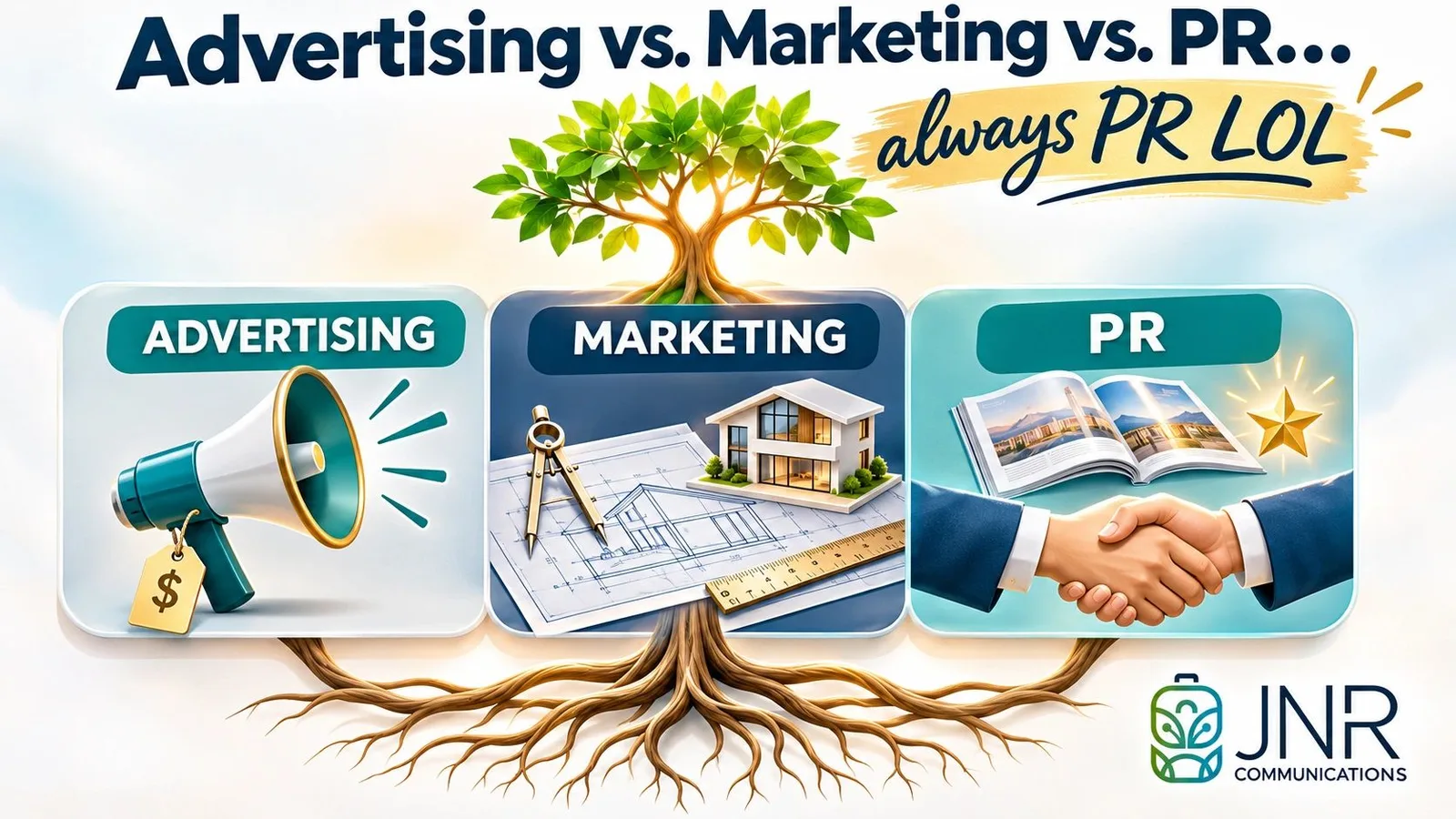
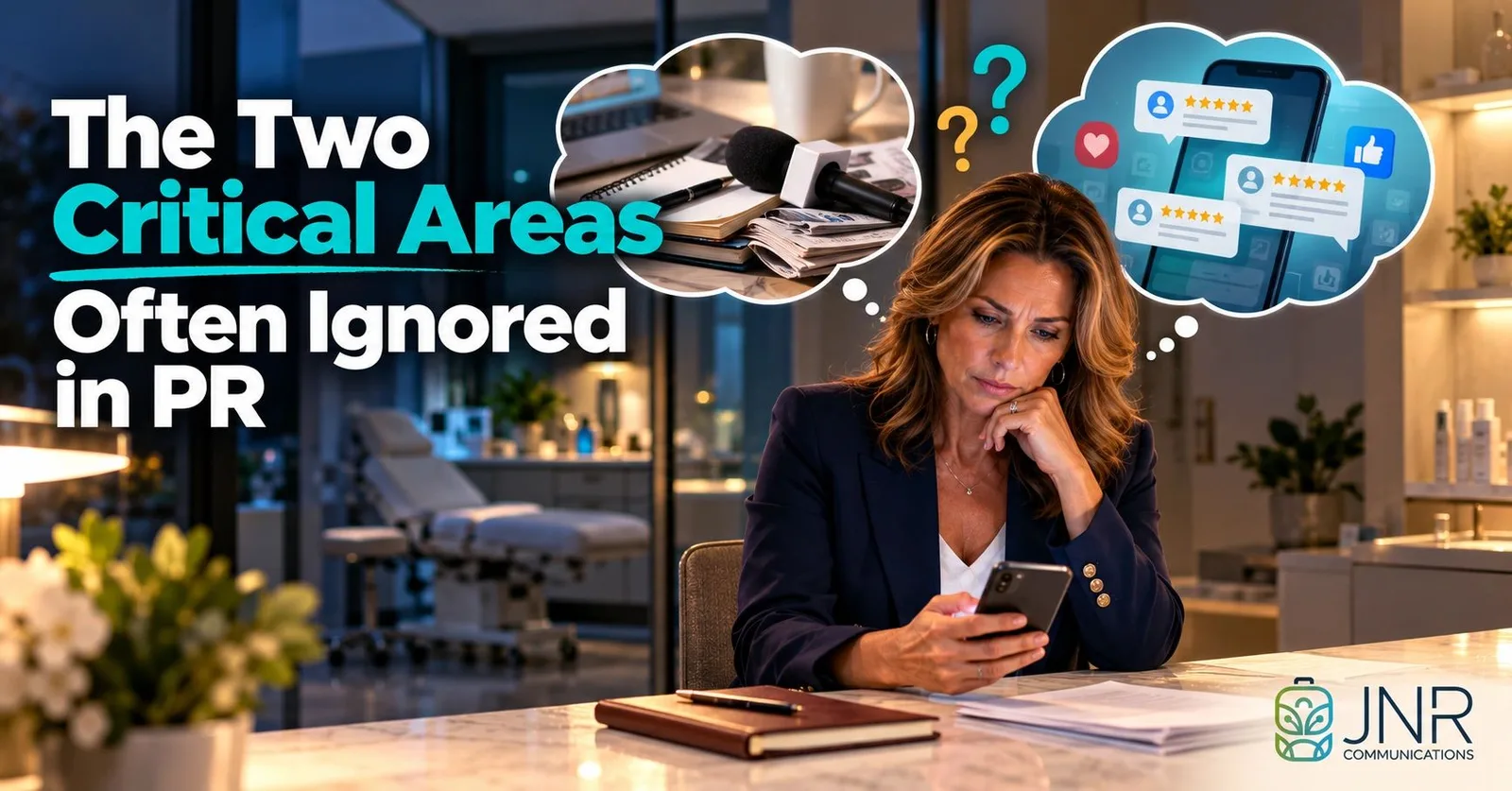
Most PR plans focus on visibility and skip reputation and crisis management. Here is why those two areas matter most, and how JNR builds them for clients.
When business owners sit down with me to talk about PR, the conversation almost always starts in the same place. They want to be seen. They want the magazine feature, the TV segment, the bigger following, the launch that gets people talking.
I understand that completely. Visibility matters. But in my experience, the businesses that grow steadily for years are not the ones that chased the most attention. They are the ones that quietly invested in two areas almost nobody puts on their PR wish list: reputation management and crisis management.
These two areas rarely get a line in the budget because nothing feels urgent. Then something happens, and the business discovers that all its visibility is sitting on a foundation nobody bothered to check.
Let's talk about why these two areas get ignored, what they actually involve, and how we approach them at JNR Communications.
Why Smart Business Owners Skip the Two Areas That Matter Most
There are three reasons I see again and again.
They feel defensive, not productive. Media placements feel like progress. Building a reputation system or a crisis plan feels like buying insurance, and nobody gets excited about insurance.
The results are invisible when they work. A well managed reputation does not announce itself. It simply shows up as referrals that convert faster, reporters who return your calls, and clients who give you the benefit of the doubt.
Owners assume they will handle it when it comes up. This is the most dangerous one. Reputation and crisis response are both built on relationships, and relationships cannot be rushed into existence on the morning you need them.
Years ago, when I worked in healthcare technology, I managed training programs for enterprise systems used by hospitals and clinics. The organizations that handled problems well were never the ones with the cleverest fix in the moment. They were the ones that had trained their people, documented their process, and built trust with their users long before anything broke. PR works exactly the same way.
Critical Area One: Reputation Management
Reputation is not what you say about yourself. It is what other people say about you when you are not in the room, and today that room includes Google, Yelp, RealSelf, Instagram comments, Reddit threads, and every group chat your clients belong to.
In medical aesthetics, beauty, and wellness, reputation carries extra weight. A potential patient considering a procedure is not buying a sandwich. They are trusting someone with their face, their body, and often their confidence. Before they call, most have already read your reviews and searched your name.
What reputation management actually involves
Good reputation management is much more than responding to bad reviews. It includes:
→ Knowing what people find when they search your name, your practice, and your key providers
→ Building a steady flow of genuine reviews from happy clients, rather than scrambling for them after a bad one lands
→ Responding to feedback, positive and negative, with warmth and professionalism
→ Earning credible third party validation through media coverage, awards, and expert commentary
→ Making sure your team, your website, and your social channels all tell the same story
That fourth point is where earned media becomes so valuable. A feature in a respected outlet does more than create a moment of visibility. It becomes a permanent piece of evidence that someone credible looked at your business and found it worth writing about. When we secured coverage for clients in outlets like Good Housekeeping and New Beauty, the lasting benefit was not the day the story ran. It was every prospective client who found that story months later while deciding whom to trust.
The relationship side of reputation
When I lived and worked in Japan as a researcher at Nagoya University, I learned how much of business culture there rests on reputation built slowly over time. People wanted to know who you were, who vouched for you, and how you had treated others before they would consider working with you.
That lesson shaped how I think about reputation here. Your reputation is really a network of trust, made up of clients, referral partners, physicians, vendors, journalists, and your community. Every interaction either strengthens that network or weakens it. In networking circles we call the principle Givers Gain: when you consistently help others first, your reputation does the selling for you.
Critical Area Two: Crisis Management
If reputation is the foundation, crisis management is the plan for the day the ground shakes.
A crisis does not have to be a national news story. For most of the businesses we work with, it looks much smaller and much more personal:
→ A one star review with a detailed and emotional story attached
→ An unhappy client posting before and after photos on social media
→ A staff member leaving on bad terms and talking about it publicly
→ A device or treatment in your category making negative headlines, even when your practice had nothing to do with it
Each of these can be managed calmly with a plan. Each can spiral without one.
Why the first hours matter so much
In a difficult moment, silence gets filled by speculation, and speculation travels faster than facts. The businesses that come through a crisis with their reputation intact usually do three things well. They respond quickly, even if the first response is simply that they are aware and looking into it. They speak with one consistent voice. And they lead with care for the people affected rather than defending themselves.
Relationships decide the outcome
Here is the part most owners discover too late. How a crisis plays out often depends on relationships that existed before it started.
If a journalist already knows and trusts your team, you are far more likely to get a fair phone call before the story runs, a chance to add context, and an honest representation of your side. If your referral partners and loyal clients have known you for years, they become your most credible defenders.
None of that can be built in the middle of a bad week. It has to be built during the calm months, which is exactly why crisis management belongs in every PR plan from day one.
How JNR Communications Addresses Both Areas
At JNR Communications, we do not treat reputation and crisis management as add-ons that come out only when something goes wrong. We build them into the work from the beginning, because they make every other part of PR more effective.
Our reputation solutions
A reputation baseline. We start by looking at what your market actually sees: search results, reviews, social presence, and media history.
Earned media that builds lasting credibility. Jennifer Rice brings nearly 30 years of media relationships across beauty, wellness, and medical aesthetics. We use those relationships to secure the kind of third party validation that continues working for you long after a story runs.
Consistent messaging across every channel. We help align your website, social media, team talking points, and public messaging so your story is clear and consistent wherever someone encounters you.
Relationship infrastructure. My focus is helping clients build the network around their reputation, including referral partners, community connections, and authentic social media engagement that turns followers into advocates.
Our crisis management solutions
Planning before it is needed. We work with clients to decide in advance who speaks, what gets said in the first hour, what never gets said, and who needs to hear from you directly.
Calm, experienced counsel in real time. When something happens, you have experienced partners on your side who have seen these situations before and know how to keep a difficult moment from becoming a defining one.
Media relationships that work on your worst day.Jennifer's long standing relationships with journalists matter most when the stakes are highest. Being known and trusted is often the difference between a fair story and a damaging one.
Recovery and rebuilding. Once things settle, we help you address the real issue, communicate what changed, and steadily rebuild visible proof of the quality your clients know you deliver.
Three Things You Can Do This Week
You do not need to wait for a full strategy to start strengthening both areas.
1. Search yourself like a stranger would. Search your business name, your providers, and your top services. Note what a new client sees on the first page.
2. Write a one page response plan. List who speaks for your business, who your team should contact, and the first sentence you would say publicly if something went wrong.
3. Invest in one relationship you have been neglecting. Reach out to a referral partner, a loyal client, or a local journalist with no request attached. Simply create value first.
Visibility gets people to notice you. Reputation gets them to trust you. Crisis readiness protects that trust when it is tested. The businesses that thrive long term are the ones that give all three the attention they deserve.
Building genuine connections takes time, but it is the foundation of PR that actually works. At JNR Communications, we combine Jennifer's nearly 30 years of media relationships with my strategic networking expertise to help businesses in beauty, wellness, medical aesthetics and CPG brands protect and grow the reputations they have worked so hard to earn. Let's talk about your goals.
📞 (818) 357-7286 | ✉️ Greg@JNRcommunications.com