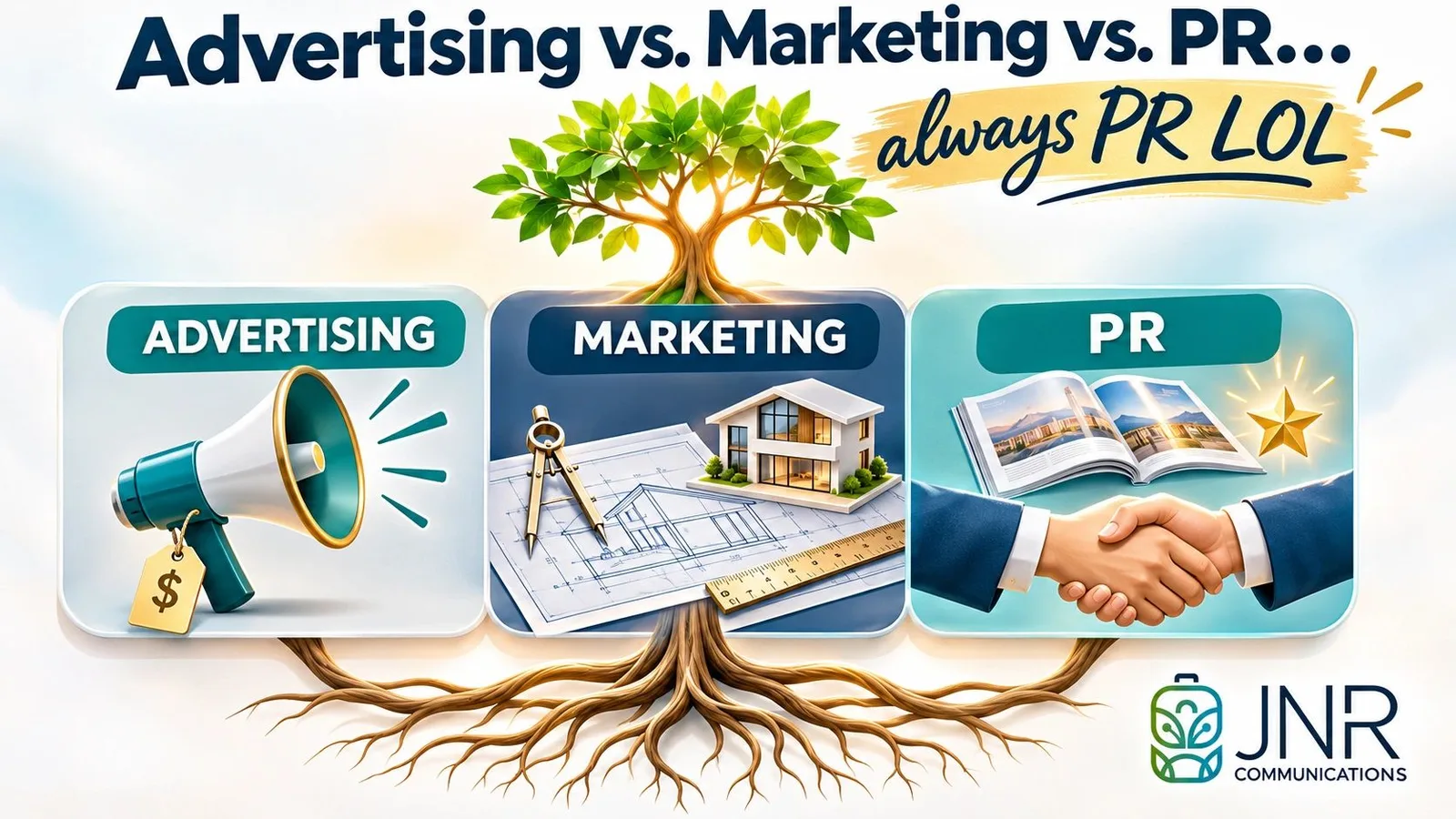
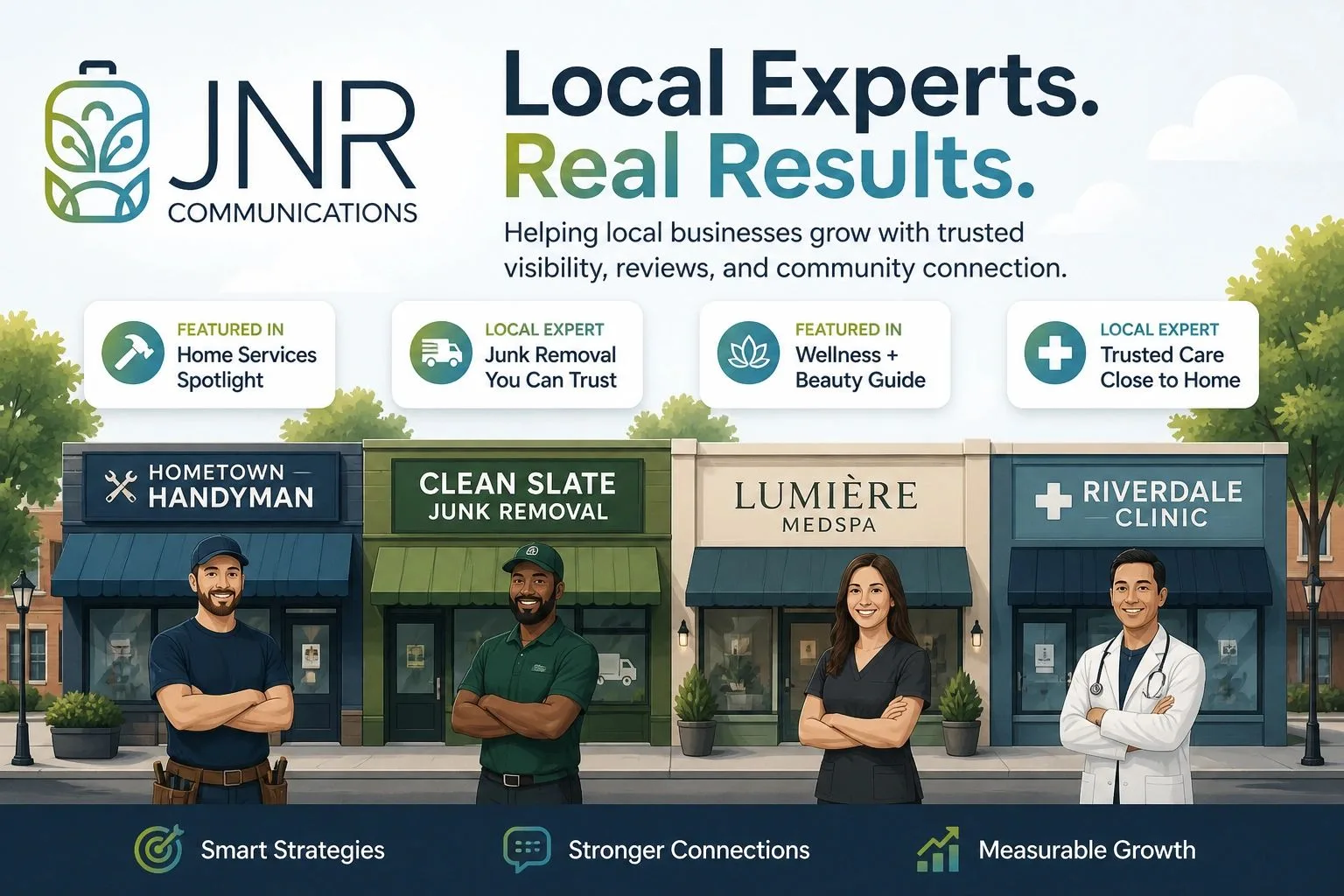
When most people think about public relations, they picture Fortune 500 companies, Hollywood premieres, and crisis communications war rooms. They don't picture the handyman who answers his own phone, the family-run junk removal company with two trucks, or the dermatologist opening her own medspa next to a Starbucks. And that's exactly the problem.
Small local businesses, including the handymen, junk removal crews, neighborhood medical clinics, and growing medspas of America, are leaving an enormous amount of growth on the table because they think PR isn't for them. They believe it's expensive, complicated, and reserved for the brands they see in glossy magazines. The truth is closer to the opposite. PR is one of the most cost-effective, durable, and scalable growth tools available to a small local business owner, and the brands that figure this out first tend to dominate their markets.
The Trust Problem No Ad Can Solve
Every small local business is selling the same thing underneath the surface: trust. A homeowner letting a handyman into her house with her kids playing in the next room is not making a price decision. She's making a trust decision. A junk removal company hauling away a deceased parent's belongings is being entrusted with something far more emotional than cardboard boxes. A patient stepping into a medspa for laser treatments or injectables is putting her face, literally her appearance to the world, in someone else's hands.
Paid advertising can drive awareness, but it cannot manufacture trust. When a consumer sees a Facebook ad, the brain registers it as a sales pitch. When that same consumer sees a feature in the local newspaper, a TV news segment, or an expert quote in a regional magazine, the brain registers it as endorsement. That distinction is the entire game. Earned media, the coverage you don't pay for, carries an implicit third-party credibility stamp that no ad budget can buy.
For service businesses where the buyer cannot inspect the product before purchase, this credibility is not a luxury. It's the deciding factor.
Why Local PR Punches Above Its Weight
National PR campaigns are designed to move millions. Local PR is designed to move neighborhoods, and that's exactly what most small businesses actually need. A handyman doesn't need to be famous in forty-eight states. He needs to be the first name that comes up when his neighbors talk about who they trust. A junk removal company doesn't need a Times Square billboard. It needs to be on the local morning show after a community cleanup event. A medspa doesn't need a Vogue cover. It needs to be quoted as the local skincare expert in the regional lifestyle magazine.
Local media outlets, including community newspapers, regional magazines, neighborhood blogs, local broadcast news, and even hyperlocal Instagram accounts and Nextdoor groups, are constantly looking for stories. They have airtime, column inches, and content calendars to fill. A well-pitched story from a credible local business owner is genuinely useful to them. This is the open door that small business owners walk past every single day.
The Compounding Effect
Most small business owners think about marketing in transactional terms. Spend a dollar, get a customer. PR doesn't work that way, and that's a feature, not a bug.
A single feature article about your medspa in a regional magazine doesn't disappear when the issue comes off the rack. It lives online. It shows up when people Google your business. It becomes a “Featured In” badge on your website that converts skeptical visitors into booked consultations. It earns backlinks that boost your local SEO rankings. It gets referenced by other journalists looking for sources. One placement can keep paying out for years.
A handyman who gets quoted as the home maintenance expert in three local outlets has just permanently changed how he appears in search results, on social media, and in the minds of every prospect who does even a five-second background check before hiring him. A junk removal company that earns coverage for donating unwanted goods to a local shelter has just acquired a story that converts price-sensitive shoppers into community-minded loyalists. None of this evaporates the way a paid ad does the moment the budget runs out.
Why Growth-Minded Owners Cannot Afford to Skip This
If you are content running a one-truck, one-technician, one-room operation forever, you can probably get by on referrals alone. But if you want to grow, to add crews, hire providers, open second locations, raise prices, or eventually sell the business, PR stops being optional and starts being structural.
Growth requires three things that PR uniquely delivers. First, it requires a steady inflow of new customers who don't know you personally, which is exactly the audience earned media reaches. Second, it requires the ability to charge premium prices, which is something credibility and authority make possible. Third, it requires the ability to attract talent, including better technicians, nurse injectors, office managers, and sales reps, who want to work for a business that looks legitimate and respected, not just busy. PR builds all three.
There is also a defensive case. A business with no media presence is a business with no reputation buffer. When something goes wrong, whether a bad review, a competitor's smear, a regulatory hiccup, or a viral complaint, the businesses that have built up a backlog of positive coverage absorb the hit and move on. The businesses that haven't can be defined entirely by their worst moment.
What “Doing PR” Actually Looks Like for a Small Local Business
PR for a small local business is not a press release factory. It's a coordinated practice of identifying what makes your business genuinely interesting and getting that story in front of the people whose attention matters most.
It looks like positioning the medspa owner as the local authority on cosmetic dermatology and getting her quoted in regional health columns. It looks like turning the junk removal company's seasonal donation drive into a feel-good local news segment. It looks like helping the handyman publish seasonal home maintenance checklists that local lifestyle blogs are happy to syndicate. It looks like making the small clinic the go-to source for the local TV health reporter every flu season.
It also looks like reputation work that quietly compounds in the background: securing the right awards, optimizing the Google Business Profile, coordinating community sponsorships that earn coverage, and building a digital footprint that makes the business look two or three times its actual size.
The Most Common Mistake Small Business Owners Make With PR
The single most common mistake we see is treating PR as a one-time event instead of a discipline. A business owner gets one local news segment, watches the phone ring for a week, and assumes that was the win. Then nothing happens for six months and they conclude PR “doesn't work.”
PR works the way compound interest works. The first placement matters less than the fifth, the fifth matters less than the fifteenth, and somewhere around the twentieth, something changes. Customers stop asking what you charge and start asking when you can fit them in. Reporters stop ignoring your pitches and start emailing you for quotes. Competitors stop being your peer set and start being your context. That shift is the actual goal, and it only happens for owners who treat PR as a long-term operating practice, not a marketing tactic.
The second most common mistake is waiting until you “have time” or “have the budget” to start. The businesses that win at this almost universally started before they felt ready, with whatever resources they had, and let the coverage fund the next round.
How JNR Communications Helps
This is the work JNR Communications was built to do. Founded by a former national journalist with bylines in Forbes, The Wall Street Journal, and The Washington Post, alongside a communications partner with two decades of corporate leadership, JNR sits at an unusual intersection. We know exactly what journalists want because we've been them, and we know exactly how growing businesses think because we've built them.
For small local businesses in medical aesthetics, beauty, wellness, home services, and adjacent categories, JNR offers something the big agencies don't: senior-level strategy at a scale that actually fits the business. We help owners identify the stories worth telling, build relationships with the local and trade reporters who matter, secure earned media that converts, and turn every placement into a long-term marketing asset.
We've placed clients in national outlets, on broadcast morning shows, in regional lifestyle magazines, and in the niche trade press where their buyers actually live. More importantly, we've watched what happens after the coverage runs: the booked consultations, the inbound calls, the talent that suddenly wants to work there, the price increases that finally hold.
If you run a small local business and you're tired of competing on price, tired of being invisible to the customers who would happily pay you more, and ready to build the kind of reputation that compounds while you sleep, PR is no longer the question. The only question is who you trust to do it right.
That's a conversation we'd love to have.
Greg@jnrcommunications.com / jnrcommunications.com