Sixty-one percent of small business owners say word-of-mouth is how they find new customers. That number keeps climbing as paid acquisition costs rise and digital advertising gets more expensive every quarter. Anyone who has run a business over the last few years has felt this shift. Cost per click goes up. Conversion rates go down. The customers you actually want, the ones who stick around and refer their friends, are increasingly arriving through someone else’s recommendation.
Here is what most businesses miss about that statistic. They read it and nod. They agree word-of-mouth matters. Then they go right back to thinking about it as something that just happens. Something passive. Something you hope for after you do good work.
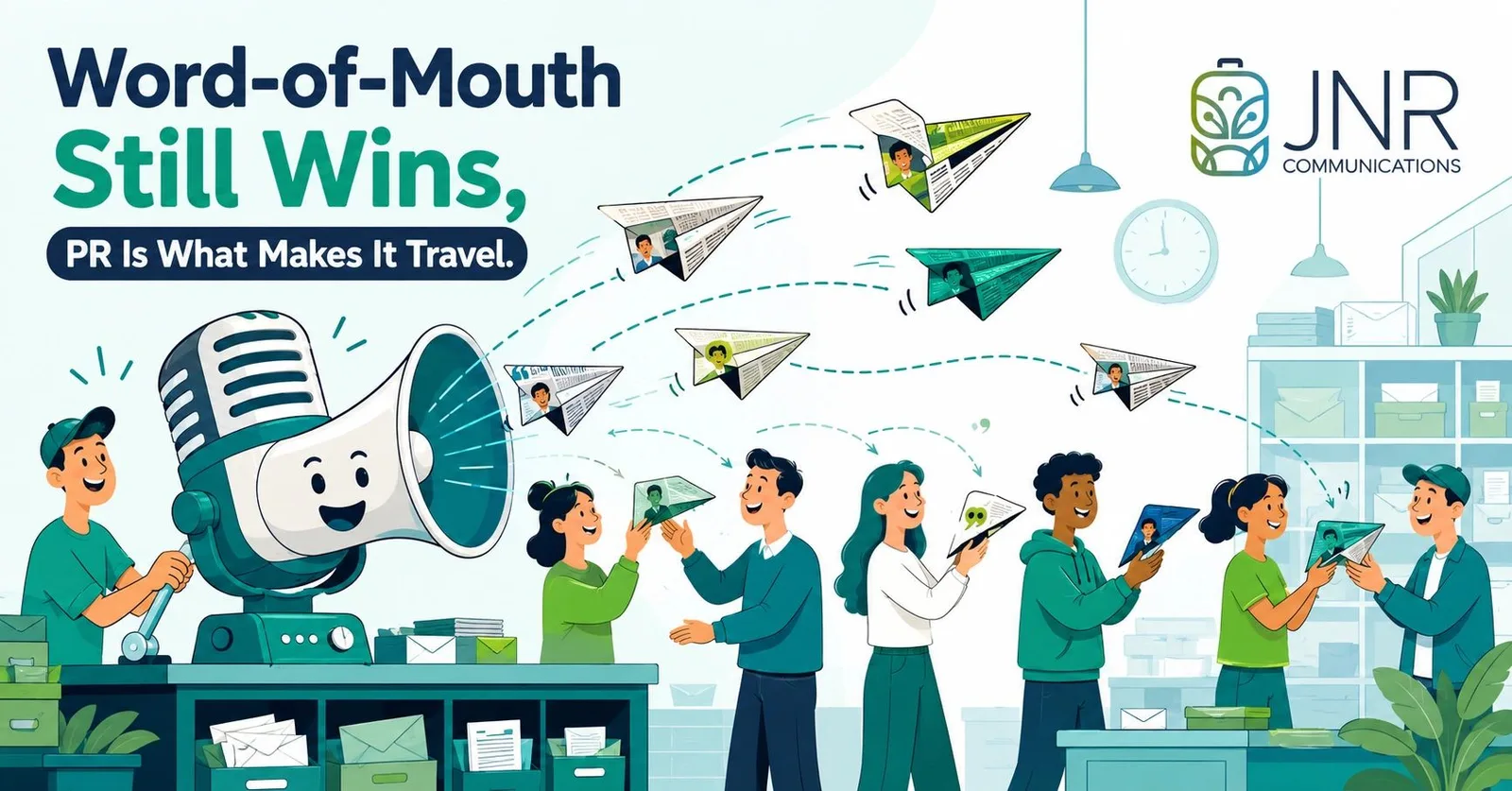
In my years building relationships across industries, from healthcare technology to international business development to networking organizations grounded in the Givers Gain philosophy, I have learned that word-of-mouth is not passive at all. The brands that win at word-of-mouth are the ones who actively engineer the conditions for it to spread. And public relations is the engine that does that engineering.
Why Word-of-Mouth Is Climbing
Several forces are converging at once. Paid digital advertising costs have risen dramatically over the last several years, and the platforms keep changing the rules. Customers have grown skeptical of polished ads and influencer endorsements that feel transactional. AI-generated content is flooding feeds, making people crave human signal more than ever. And in specialized industries like medical aesthetics, beauty, wellness, and medical devices, the stakes of every decision are too personal for a customer to trust a stranger’s sponsored post.
When the cost of acquiring a customer through ads keeps climbing, the value of a customer who arrives because their friend told them about you becomes exponentially more important. That referred customer typically converts faster, spends more, and stays longer. And they bring others.
The question is not whether word-of-mouth matters. The question is whether you are doing anything to help it travel.
The Three Things PR Does That Make Referrals Happen
I want to break this down practically because the connection between PR and word-of-mouth is often misunderstood. People think PR is about getting your name in a magazine. That is part of it. But the deeper purpose is something else entirely.
1. PR Engineers Shareable Moments
A great media placement is not just an ego boost. It is a story that your existing clients can forward to their friends. It is a moment they want to be associated with. When a dermatologist gets featured in a beauty magazine talking about a new approach to skin health, every patient in that practice now has something to share. The article becomes a gift. They send it to a friend with a quick note. “This is my doctor. She is great.”
That is word-of-mouth in motion. And it would not have happened without the placement.
The same principle applies to industry awards, podcast appearances, conference speaking slots, and feature stories about your company’s growth or innovation. Each one is a shareable moment that your network can pass along. Without those moments, your clients have nothing to forward except a link to your website. And nobody forwards a link to a website.
2. PR Gives Your Clients the Language to Use
When someone asks one of your clients what makes you different, what do they say? In most businesses, the answer is a vague compliment. “She is great.” “They do good work.” That kind of recommendation does not travel well because it does not tell the listener anything specific.
PR fixes this problem by giving your clients the words. When you are quoted in an industry publication explaining your unique approach, when a journalist describes your method in a feature story, when a podcast host introduces you with a clear positioning statement, you are providing your clients with a script. Now when their friend asks why they chose you, they have something to say beyond “she is great.” They have a story, a phrase, a credential, a context that makes the recommendation specific and persuasive.
In medical aesthetics, this matters enormously. A potential patient is making a decision about their face or their body. A vague recommendation is not going to be enough. They want to know why you are the right choice. Your existing clients need language that conveys that, and PR is what creates that language.
3. PR Gets You Cited in Places That Fuel Referral Conversations
This is the most underrated function of PR. Every time your name appears in a credible publication, you become easier to recommend. The friend who is hesitant to recommend you outright can simply forward an article. The colleague at the networking event can mention they saw you in Good Housekeeping or New Beauty Magazine. The referral becomes safer, easier, and more confident.
I have watched this play out for years in networking groups. The members who get profiled in industry publications, who appear as expert sources in news stories, who win awards that get written up, generate dramatically more referrals than members with similar skills who have no media presence. The work is the same. The trust signal is different.
Citations also create a digital trail. When someone hears your name and Googles you, what they find shapes whether the recommendation lands. If they see industry publications, expert quotes, and feature stories, the conversation moves forward. If they see nothing, the conversation stalls.
The Givers Gain Connection
The networking philosophy I have practiced for years, Givers Gain, teaches that the most reliable way to build a business is to give value first. Help others. Make introductions. Share knowledge generously. The returns come, but they come through relationships rather than transactions.
PR works the same way. The brands that win at earned media are the ones who show up as genuinely useful. They share insights with journalists who are working on stories. They make their experts available. They help other businesses get visibility too. They invest in the relationships before they need them.
This is not a trick or a tactic. It is a worldview. And it is the same worldview that makes word-of-mouth travel. People recommend people who give. They share content from brands that contribute. They forward articles from companies that taught them something. The Givers Gain principle is what fuels both networking and PR, which is why the two work so powerfully together.
Why Most Businesses Get This Wrong
The mistake I see most often is treating PR as an isolated marketing tactic. Companies hire a PR agency, get a placement, and then wonder why their phone is not ringing. The placement was supposed to be the result. It is not. The placement is the raw material. What you do with it, how you share it, how you equip your clients to share it, how you weave it into your relationship infrastructure, that is what generates the word-of-mouth lift.
The other mistake is impatience. PR is slow. Relationships with journalists take months to build. The first placement might not move the needle. The third one starts to. The tenth changes the trajectory of the business. Companies that quit at month three never see what month twelve looks like, and they conclude PR does not work. What actually does not work is treating a long game like a short one.
How JNR Communications Approaches This
At JNR Communications, we have built our practice around the connection between earned media and relationship-driven growth. Jennifer Rice has spent nearly three decades cultivating the kind of journalist relationships that produce real placements, including coverage in major publications and national television. Our team specializes in industries where word-of-mouth matters most: medical aesthetics, beauty, wellness, medical devices, and other specialized B2B and B2C brands.
What that looks like in practice is a strategy that does not stop at the placement. We help our clients turn each piece of coverage into a tool their network can use. We think about which moments will be most shareable, which language will travel furthest, which citations will fuel the conversations they need. We treat PR as relationship infrastructure, not as a one-off campaign.
If your business depends on referrals, and most specialized businesses do, the question is not whether to invest in PR. The question is whether you are building the kind of earned media presence that makes your existing word-of-mouth travel further. The brands that figure this out compound. The ones that do not stay stuck paying more for ads every year.
Let’s Build Your Relationship Infrastructure
If you are ready to give your word-of-mouth the engine it deserves, we should talk. JNR Communications combines Jennifer Rice’s nearly three decades of media relationships with a strategic approach to networking and earned media that helps specialized businesses turn coverage into conversations and conversations into clients.
Greg@JNRcommunications.com / JNRcommunications.com